
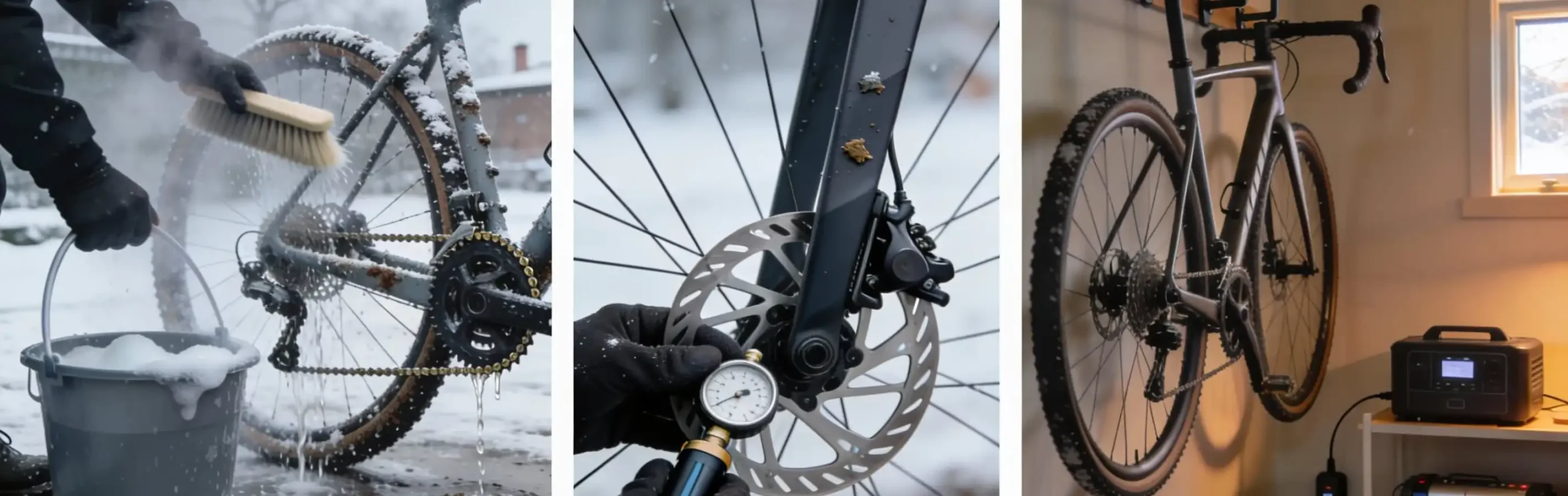
No matter how motivated you are, it’s a fact that we ride less in the winter.
So, one of those days that you just don’t feel like riding, do some serious maintenance and then get back on the bike. Or, put your bike away for a while and pick it up again in the spring.
If you want to do it yourself, there are a few simple rules to follow to keep your bike in top condition even in winter.
For those who ride all winter
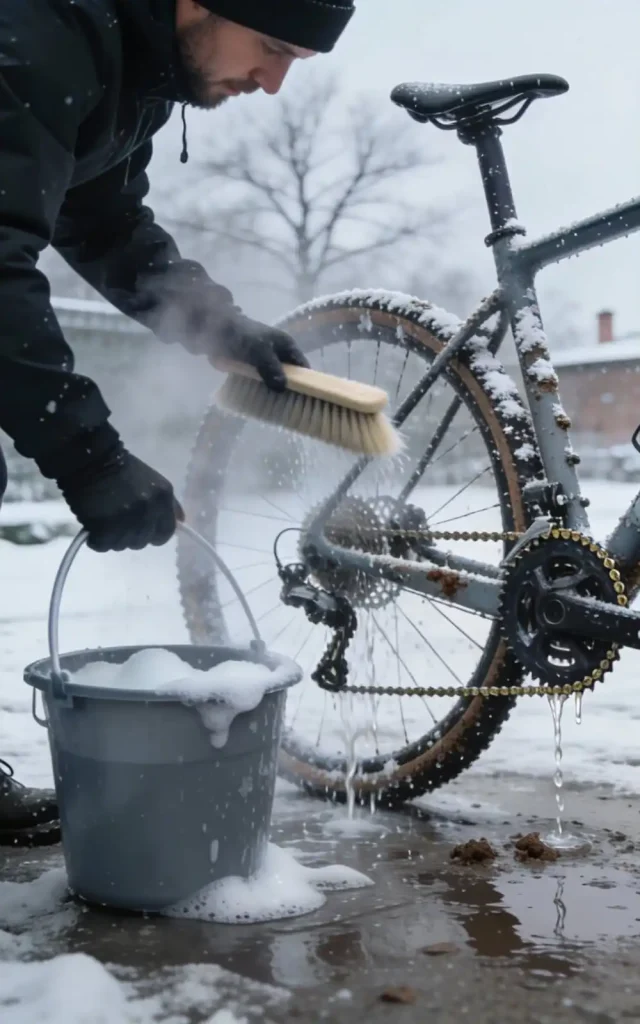
Winter maintenance is all about one thing: cleanliness. Clean, clean, clean—treat it like a mantra. Cold, wet months mean your bike is constantly exposed to grime from asphalt, mud, road salt, and all the unpleasant slush that accumulates on winter roads and trails. This mixture doesn’t just make your bike look dirty; it accelerates wear on moving parts and can even cause corrosion if left unattended.
After every ride, give your bike a quick once‑over. Avoid using pressurized water, which can force moisture and dirt into bearings and seals. Instead, use a gentle stream or a damp cloth, and always finish by drying the bike thoroughly to prevent rust.
Your drivetrain deserves extra attention in winter. Clean and lubricate it more frequently than you would in the summer. Moisture, grit, and road salt can settle on the chain, cassette, and chainrings, creating a grinding paste that wears components down far faster than a typical summer rainstorm ever would.
A light degrease-and-lube routine after wet rides can dramatically extend the life of your drivetrain and keep shifting smooth.
If your bike is equipped with disc brakes, be especially careful with lubricants. Never use spray lubricants anywhere near the braking system. These products create a fine mist that can drift onto the rotors or pads, instantly compromising braking power and forcing you into a messy cleaning job—or even a pad replacement. Apply lubricants carefully and directly, and keep anything oily far away from your discs.
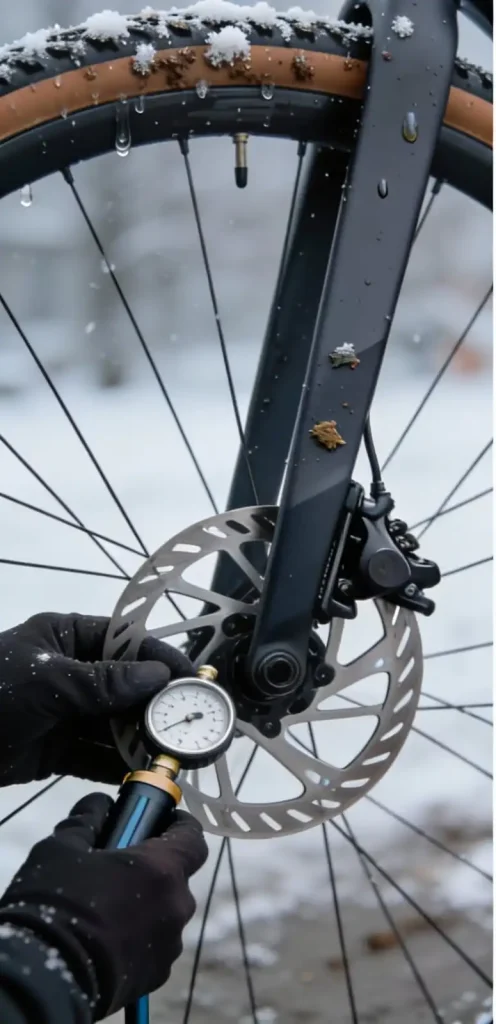
Check your brakes before every ride; they wear out faster in winter.
Check your tires carefully for wear; roads are dirtier and the risk of punctures increases.
Also check your tire pressure carefully; not over-inflated to improve grip, not under-inflated to avoid a flat tire.
If you have tubeless tires, checking the fluid level mid-winter is a good idea.
For those storing their bike for the winter
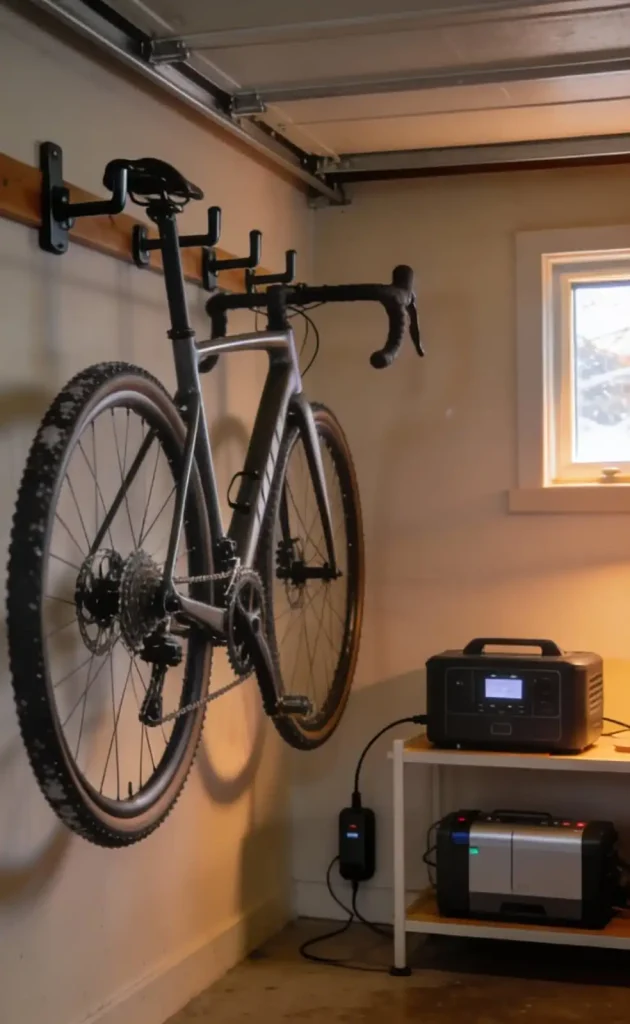
To get your bike back in good condition after the winter, a few small precautions are necessary; here are some tips.
Don’t store your bike in a humid place with significant temperature fluctuations; it’s best to keep it off the ground to prevent the tires from flattening.
Clean it before storing it; during this cleaning process, you can also check for any malfunctions. Oiling the mechanical parts after cleaning is always recommended. Be careful: not even a drop of oil should touch the disc brakes.
Tires should only be inflated to half the normal pressure.
Tubeless tires should be removed and cleaned to prevent sediment from forming during the winter.
Release the gear shift springs by placing it in the storage position.
For ebikes and the batteries
On e-bikes, it’s best not to leave batteries and displays out in the cold; remove them and bring them indoors after every ride. For e-bikes, it’s recommended to adequately protect the electrical and electronic parts that are sensitive to humidity. Batteries should be kept at temperatures above 5-7 degrees Celsius and recharged at least once every 3 months.
Lithium‑ion batteries don’t love the cold. Low temperatures reduce range and can stress the cells if not handled properly.
- Store the battery indoors when not riding—ideally at room temperature.
- Charge it indoors, too. Charging a cold battery can shorten its lifespan.
- Expect reduced range in winter; this is normal. Cold slows the chemical reactions inside the battery.
- Avoid deep discharges in freezing temperatures. Try to keep the battery above 20–30% during rides.
If your bike has a removable display, bring that inside as well.
Winter riding is tough on bikes, but with a bit of consistent care, your machine will stay reliable, safe, and ready for every cold-weather adventure.